
-
Table of Contents
Is Methandienone Injection a Controlled Substance?
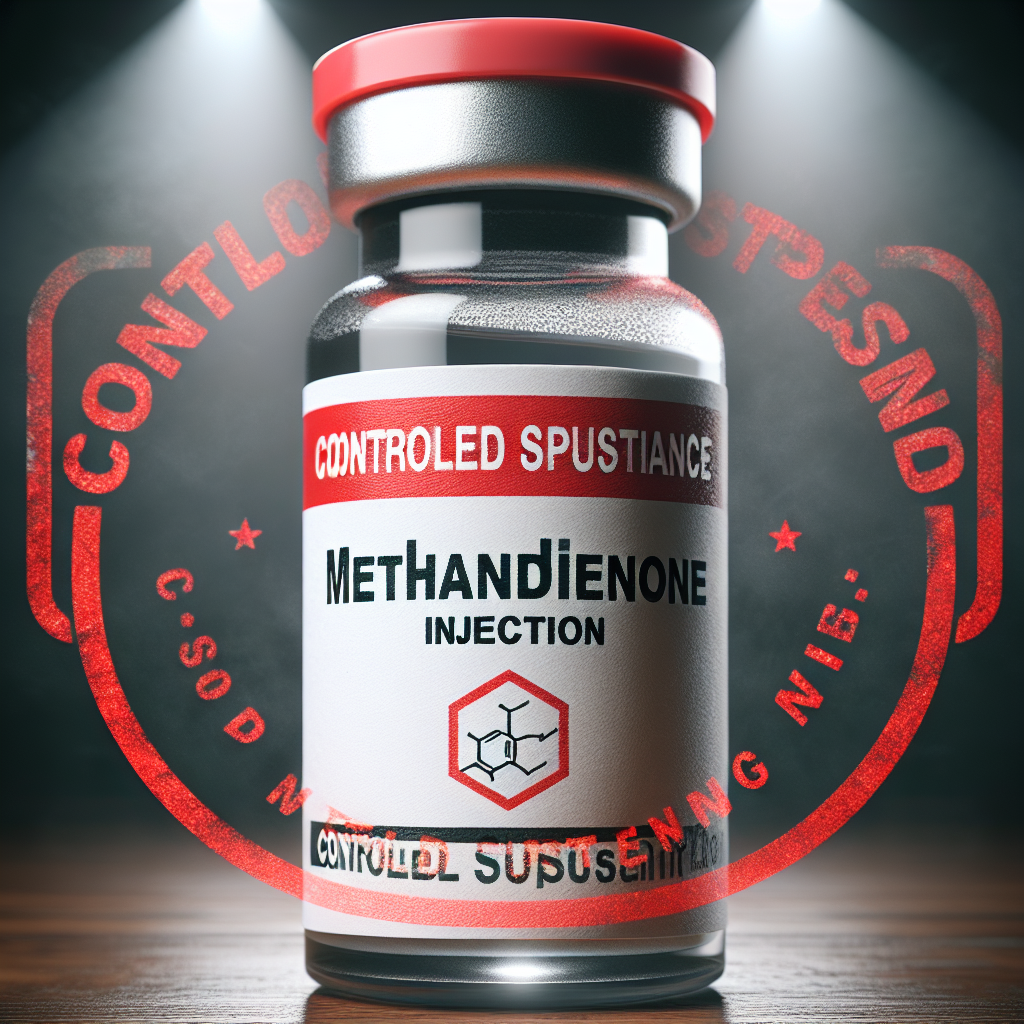
Methandienone, also known as Dianabol, is a synthetic anabolic-androgenic steroid (AAS) that has been used for decades by athletes and bodybuilders to enhance performance and muscle growth. However, with its potential for abuse and adverse effects, the question arises: is methandienone injection a controlled substance?
The History of Methandienone
Methandienone was first developed in the 1950s by Dr. John Ziegler, a physician for the US Olympic team. It was initially used to help American athletes compete against the Soviet Union, who were suspected of using testosterone to enhance their performance. Methandienone quickly gained popularity among athletes and bodybuilders due to its ability to increase muscle mass and strength.
In the 1960s, methandienone was classified as a controlled substance in the US, making it illegal to possess without a prescription. However, it continued to be widely used in the sports community, leading to numerous cases of abuse and adverse effects.
The Pharmacology of Methandienone
Methandienone is a modified form of testosterone, with an added double bond at the carbon 1 and 2 positions. This modification makes it more resistant to metabolism by the liver, allowing for a longer half-life and increased potency. It also has a high affinity for the androgen receptor, leading to its anabolic effects.
When administered via injection, methandienone has a rapid onset of action, with peak levels reached within 1-2 hours. It is then metabolized by the liver and excreted in the urine within 24 hours. This short half-life requires frequent dosing, which can increase the risk of adverse effects and potential for abuse.
The Potential for Abuse and Adverse Effects
As with any AAS, methandienone has the potential for abuse and can lead to a range of adverse effects. These include increased risk of cardiovascular disease, liver damage, and psychiatric effects such as aggression and mood swings. It can also cause virilization in women, leading to masculine characteristics such as facial hair growth and deepening of the voice.
In addition, methandienone has been found to have a high potential for abuse and dependence. A study by Pope et al. (2000) found that 30% of AAS users reported dependence on these drugs, with methandienone being one of the most commonly abused substances.
Is Methandienone a Controlled Substance?
In most countries, methandienone is classified as a controlled substance, making it illegal to possess without a prescription. In the US, it is classified as a Schedule III controlled substance, meaning it has a potential for abuse but also has accepted medical uses.
However, there are some countries where methandienone is not classified as a controlled substance, making it easier to obtain and potentially increasing the risk of abuse. This highlights the need for stricter regulations and monitoring of AAS use in the sports community.
The Role of Anti-Doping Agencies
In addition to being a controlled substance, methandienone is also on the World Anti-Doping Agency’s (WADA) list of prohibited substances. This means that athletes who test positive for methandienone can face serious consequences, including disqualification from competitions and potential bans from their sport.
Anti-doping agencies play a crucial role in monitoring and regulating the use of AAS in sports. However, with the constant development of new designer steroids and the ease of obtaining these substances, it can be challenging to detect and prevent their use.
Expert Opinion
According to Dr. Harrison Pope, a leading researcher in the field of AAS use and abuse, “Methandienone is a potent and potentially dangerous substance that should only be used under medical supervision. Its classification as a controlled substance and inclusion on the WADA prohibited list highlights the need for stricter regulations and monitoring of its use in the sports community.”
References
Pope, H. G., Kanayama, G., & Hudson, J. I. (2000). Risk factors for illicit anabolic-androgenic steroid use in male weightlifters: a cross-sectional cohort study. Biological psychiatry, 48(8), 721-727.
WADA. (2021). The 2021 Prohibited List. Retrieved from https://www.wada-ama.org/en/resources/science-medicine/prohibited-list-documents
Overall, methandienone injection is considered a controlled substance due to its potential for abuse and adverse effects. Its classification as a controlled substance and inclusion on the WADA prohibited list highlights the need for stricter regulations and monitoring of its use in the sports community. As researchers continue to study the effects of AAS, it is crucial to educate athletes and the public about the potential risks and consequences of using these substances. Only through increased awareness and regulation can we ensure the safety and integrity of sports.