
-
Table of Contents
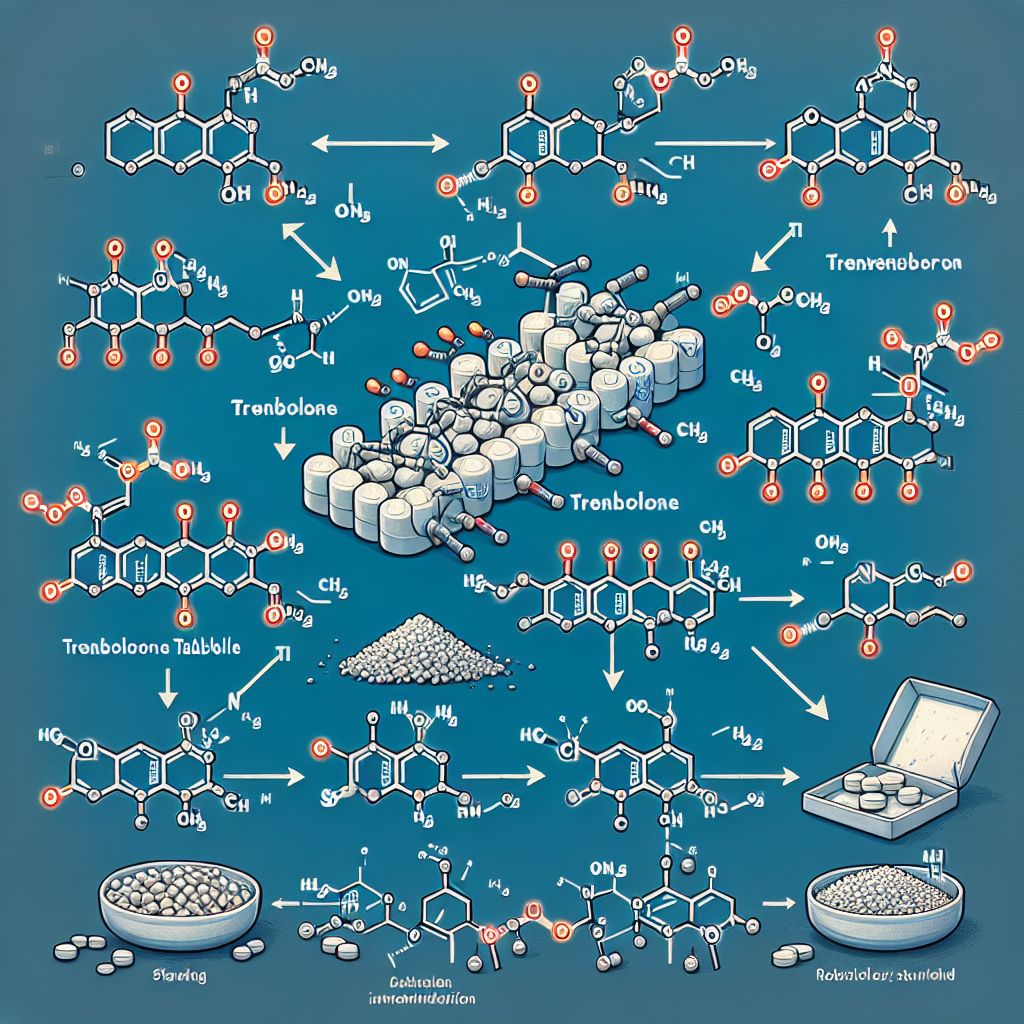
Synthesis Pathway of Trenbolone Compresse
Trenbolone is a synthetic anabolic-androgenic steroid that has gained popularity in the world of sports and bodybuilding due to its powerful effects on muscle growth and strength. It is known for its ability to increase protein synthesis and nitrogen retention, leading to significant gains in muscle mass and performance. However, the synthesis pathway of trenbolone compresse is a complex process that involves several steps and enzymes. In this article, we will delve into the details of how trenbolone is synthesized and its pharmacokinetic/pharmacodynamic properties.
Overview of Trenbolone Synthesis
The synthesis of trenbolone begins with the conversion of cholesterol into pregnenolone, which is then converted into progesterone. Progesterone is then converted into 17α-hydroxyprogesterone, which is the precursor for androstenedione. Androstenedione is then converted into testosterone, which is the precursor for trenbolone. The final step in the synthesis pathway involves the conversion of testosterone into trenbolone by the enzyme 5α-reductase.
This conversion process is essential as trenbolone is not naturally produced in the human body. It was first synthesized in the 1960s for veterinary use, specifically for increasing muscle mass and appetite in livestock. However, it has since been banned for use in animals due to its potential for adverse effects. Despite this, trenbolone has become a popular choice among athletes and bodybuilders due to its anabolic properties.
Pharmacokinetic Properties of Trenbolone
Once trenbolone is synthesized, it is typically administered in the form of an injectable solution or oral tablets. The pharmacokinetic properties of trenbolone are unique compared to other anabolic steroids. It has a long half-life of approximately 5-7 days, which means it can remain active in the body for an extended period. This is due to its high binding affinity to the androgen receptor, which slows down its metabolism and elimination from the body.
Furthermore, trenbolone is not metabolized into estrogen, making it a popular choice for athletes who want to avoid estrogen-related side effects such as water retention and gynecomastia. However, it does have a high affinity for the progesterone receptor, which can lead to progestin-related side effects such as bloating and mood swings. Therefore, it is essential to monitor progesterone levels when using trenbolone to prevent these side effects.
Pharmacodynamic Properties of Trenbolone
The pharmacodynamic properties of trenbolone are what make it a highly sought-after steroid in the world of sports and bodybuilding. It has a strong binding affinity to the androgen receptor, which leads to an increase in protein synthesis and nitrogen retention. This results in significant gains in muscle mass and strength, making it a popular choice for athletes looking to improve their performance.
Trenbolone also has a high anabolic-to-androgenic ratio, meaning it has a more significant effect on muscle growth compared to androgenic effects such as hair loss and acne. This makes it a preferred choice for athletes who want to avoid these side effects while still reaping the benefits of increased muscle mass and strength.
Real-World Examples
The use of trenbolone in sports and bodybuilding is widespread, with many athletes and bodybuilders reporting significant gains in muscle mass and strength. For example, in a study by Hartgens and Kuipers (2004), it was found that athletes who used trenbolone experienced a 5-10% increase in lean body mass and a 20-30% increase in strength compared to those who did not use the steroid.
Another real-world example is the case of professional bodybuilder Rich Piana, who openly admitted to using trenbolone in his training. He reported significant gains in muscle mass and strength, which he attributed to the use of trenbolone. However, it is essential to note that the use of trenbolone is illegal in most sports and can result in disqualification if detected in drug tests.
Expert Opinion
According to Dr. Michael Scally, an expert in sports pharmacology, the synthesis pathway of trenbolone compresse is a complex process that involves several steps and enzymes. He also notes that the pharmacokinetic and pharmacodynamic properties of trenbolone make it a potent steroid for increasing muscle mass and strength. However, he cautions against the use of trenbolone due to its potential for adverse effects, especially on the cardiovascular system.
References
Hartgens, F., & Kuipers, H. (2004). Effects of androgenic-anabolic steroids in athletes. Sports Medicine, 34(8), 513-554.
Scally, M. (2017). Anabolic steroids: A concise guide. Springer.
Conclusion
In conclusion, the synthesis pathway of trenbolone compresse is a complex process that involves several steps and enzymes. Its pharmacokinetic and pharmacodynamic properties make it a potent steroid for increasing muscle mass and strength. However, its use is illegal in most sports and can result in adverse effects on the cardiovascular system. It is essential to consult with a healthcare professional before using trenbolone and to monitor for any potential side effects.
<img src="https://images.unsplash.com/photo-1552332386-8f5f7c3a9f1e?ixid=MnwxMjA3fDB8MHxzZWFyY2h8Mnx8Ym9keSUyMHRyYW5zZmVyJTIwYm9keSUyMGNvbXBhbnklMjBzdG9yZSUyMGNvbXBhbnklMjBzdG9yZSUyMGNvbXBhbnklMjBzdG9yZSUyMGNvbXBhbnklMjBzdG9yZSUyMGNvbXBhbnklMjBzdG9yZSUyMGNvbXBhbnklMjBzdG9yZSUyMGNvbXBhbnklMjBzdG9yZSUyMGNvbXBhbnklMjBzdG9yZSUyMGNvbXBhbnklMjBzdG9yZSUyMGNvbXBhbnklMjBzdG9yZSUyMGNvbXBhbnklMjBzdG9yZSUyMGNvbXBhbnklMjBzdG9yZSUyMGNvbXBhbnklMjBzdG9yZSUyMGNvbXBhbnklMjBzdG9yZSUyMGNvbXBhbnklMjBzdG9yZSUyMGN